|
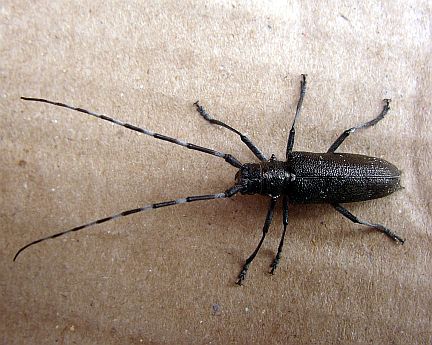
Common Name: Spruce Sawyer Latin Name:
Monochamus scutellatus (LeConte, 1873)
(R. Bercha, det.)
Length: 20 - 25 mm (not
including antennae)
Range: Forested areas
of Alberta
Habitat:
Forested areas near spruce trees
Time of year seen: June to
September (Additional Sightings)
Diet: Larvae tunnel galleries in dead spruce trees
Other: The Spruce Sawyer is a widespread species that is found across
Canada. The adult beetles typically emerge from late May to July. Their
coloration ranges from mottled grey to black with a white spot at the base
of the elytra. Antenna length differs between the sexes, with the male’s
antennae being twice as long as their bodies while the females are close to
body length. The adult beetles feed on the foliage and bark of spruce,
Douglas fir, tamarack, native pines and true firs. The beetles feed for a
few weeks before laying their eggs on damaged, dying, recently dead or
felled trees. The larva hatch shortly after and tunnel into the tree/log and
bore extensive tunnel systems in the sap and heart wood. Logs that are
stored for to long in sawmill yards can be seriously damaged by Spruce
Sawyer larva. In many cases the first obvious sign of infestation is the
presence of adult beetles flying around. The Spruce Sawyer takes two years
to complete its life cycle. (Evans et al, 2006, Ives et al, 2003) |